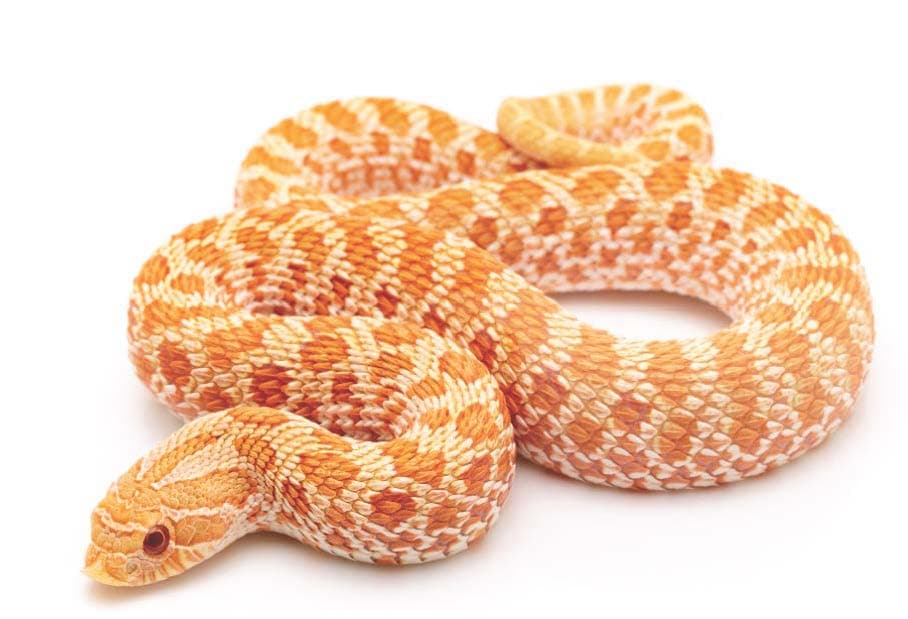
A 40-gallon long terrarium minimum for adults, with secure ventilated lid. Provide a substrate suitable for burrowing such as aspen shavings or cypress mulch 3-4 inches deep. Include a water bowl, hiding spots on both warm and cool sides, and optional climbing branches. Ensure escape-proof enclosure as these snakes are skilled escape artists.
Maintain a thermal gradient with basking spot and cool side. Use under-tank heaters or ceramic heat emitters. Monitor with digital thermometers.
Humidity
Western Hognose Snakes prefer relatively low humidity typical of their native prairie habitat. Maintain proper humidity with occasional light misting and a water bowl.
Feed appropriately sized frozen-thawed rodents. Prey should be roughly the same width as the thickest part of the snake. Some individuals may be finicky eaters and may refuse food occasionally, which is normal behavior.
Frequency: Juveniles: every 5-7 days, Adults: every 7-14 days
Pinkie miceAdult miceFuzzy miceHopper mice
Handling
Generally docile and tolerate handling well. Allow 48 hours after feeding before handling. Support the snake's body and move slowly. Some may hiss, flatten their necks, or play dead when stressed - this is normal defensive behavior. Handle 2-3 times per week maximum.
Western Hognose Snakes are generally hardy when proper husbandry is maintained. Regular observation for changes in behavior, appetite, or appearance is important. Consult a qualified reptile veterinarian for any health concerns.
- Mites
- Respiratory infections
- Stuck shed
- Feeding refusal
- Scale rot
Breeding
Sexual maturity reached at 2-3 years. Breeding season typically occurs after a cooling period (brumation) of 8-12 weeks at 50-55°F. Females lay 4-23 eggs after a 28-35 day gestation period. Eggs incubate at 82-84°F for 50-65 days. Breeding should only be attempted by experienced keepers.
Western Hognose Snakes have numerous popular morphs including Albino, Anaconda, Axanthic, Conda, Lavender, Leucistic, Red, Snow, Superconda, and Toffee. Many designer combinations exist, making them popular among reptile enthusiasts and breeders.