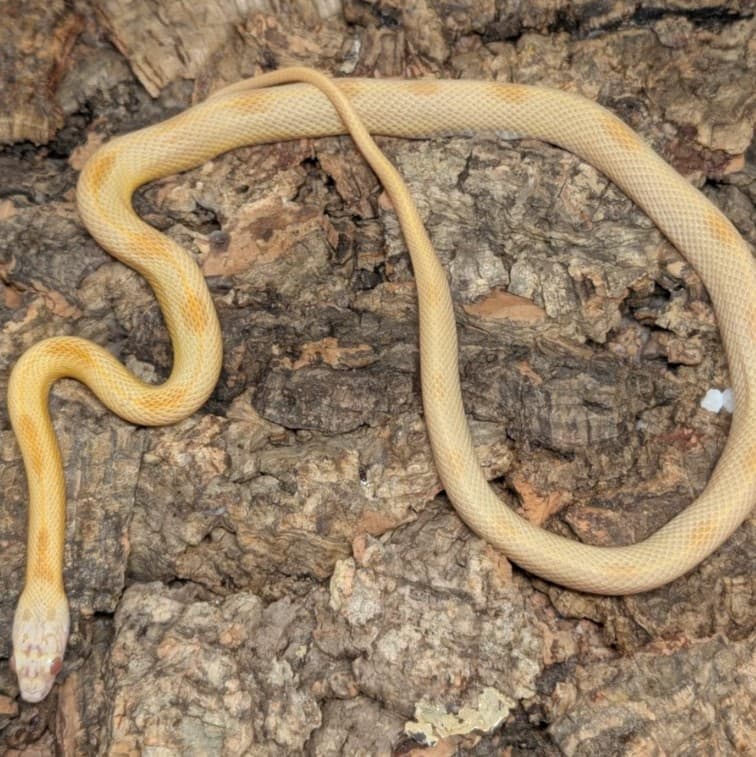
A 40-gallon long tank minimum for adults, with secure ventilated lid. Provide hiding spots on both warm and cool sides, a water bowl large enough for soaking, and substrate suitable for burrowing such as aspen shavings or cypress mulch. Include climbing branches as corn snakes are semi-arboreal.
Maintain a temperature gradient with a warm basking spot and cooler area. Use under-tank heaters or ceramic heat emitters controlled by thermostats. Monitor temperatures with digital thermometers or temp guns.
Hot side
85-88°F basking spot
Cool side
75-80°F cool side
Night
70-75°F nighttime drop acceptable
Humidity
Corn snakes require moderate humidity levels. Maintain proper humidity with a large water bowl and occasional light misting if needed. Ensure adequate ventilation to prevent mold and respiratory issues.
Feed appropriately-sized frozen-thawed rodents. Prey should be roughly the same width as the thickest part of the snake's body. Young snakes eat more frequently than adults.
Frequency: Juveniles every 5-7 days, adults every 10-14 days
frozen-thawed micefrozen-thawed rats for large adults
Handling
Corn snakes are generally docile and tolerate handling well. Wait 48-72 hours after feeding before handling. Support the snake's body when lifting and avoid sudden movements. Handle gently and confidently for 10-15 minutes at a time. Avoid handling during shedding periods when eyes are cloudy.
Corn snakes are generally hardy when proper husbandry is maintained. Monitor for signs of illness including mites, respiratory infections, retained sheds, and feeding issues. Maintain clean habitat and proper temperatures to prevent most health problems.
- mites
- respiratory infections
- retained shed
- feeding refusal
- impaction
Breeding
Corn snakes reach sexual maturity at 2-3 years of age. Breeding requires a winter cooling period of 50-60°F for 2-3 months, followed by gradual warming and introduction of pairs. Females lay 10-30 eggs after a 60-65 day incubation period at 80-85°F. Breeding should only be attempted by experienced keepers with adequate space and resources.
Corn snakes have an extensive variety of morphs including Albino, Anerythristic, Snow, Okeetee, Bloodred, Lavender, Pewter, and many designer combinations. Each morph represents different genetic traits affecting color and pattern while maintaining the same care requirements.